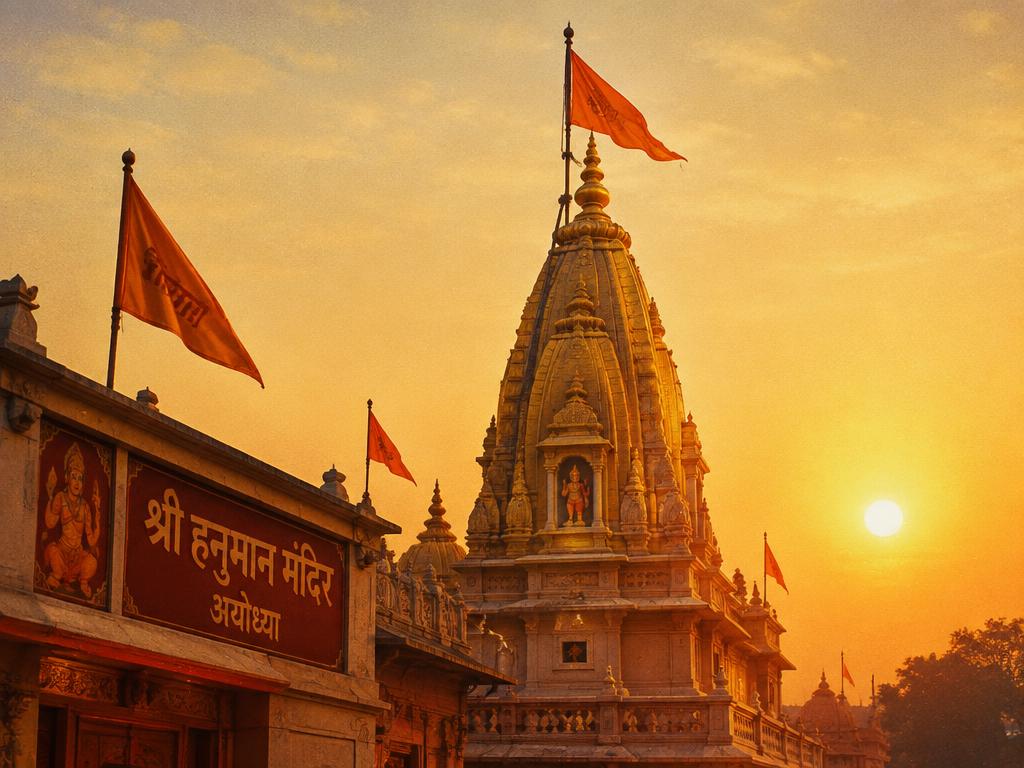
Hanuman Garhi
Ayodhya, Uttar Pradesh
A fortress-temple reached by seventy-six steps, built in the 10th century and rebuilt in the 18th. Pilgrims greet Hanuman here before they greet Rama — he is said to hold the keys to the city.
हनुमान मंदिर
From a fortress above Ayodhya to a roofless shrine in Tamil Nadu and a red sanctum on a Himalayan ridge — the places where devotees go to sit with him.
Ayodhya, Uttar Pradesh
A fortress-temple reached by seventy-six steps, built in the 10th century and rebuilt in the 18th. Pilgrims greet Hanuman here before they greet Rama — he is said to hold the keys to the city.
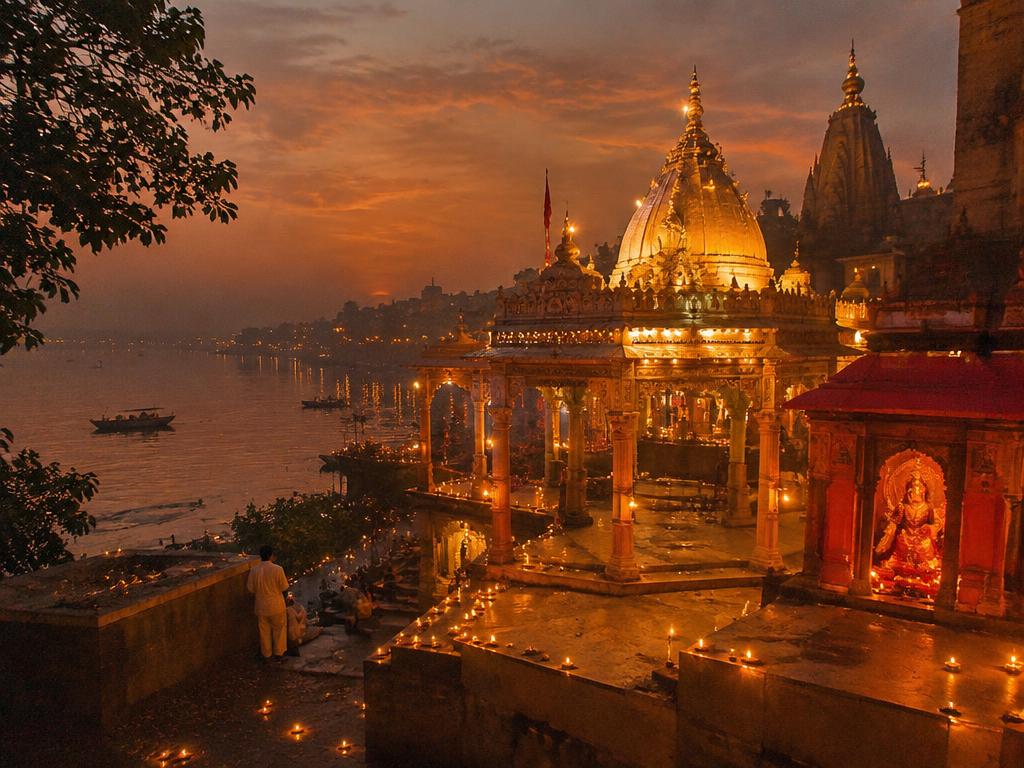
Varanasi, Uttar Pradesh
Founded by Tulsidas himself on the spot where he is said to have had Hanuman's darshan. Tuesdays and Saturdays bring enormous queues, laddoo by the sackful, and a resident population of monkeys.
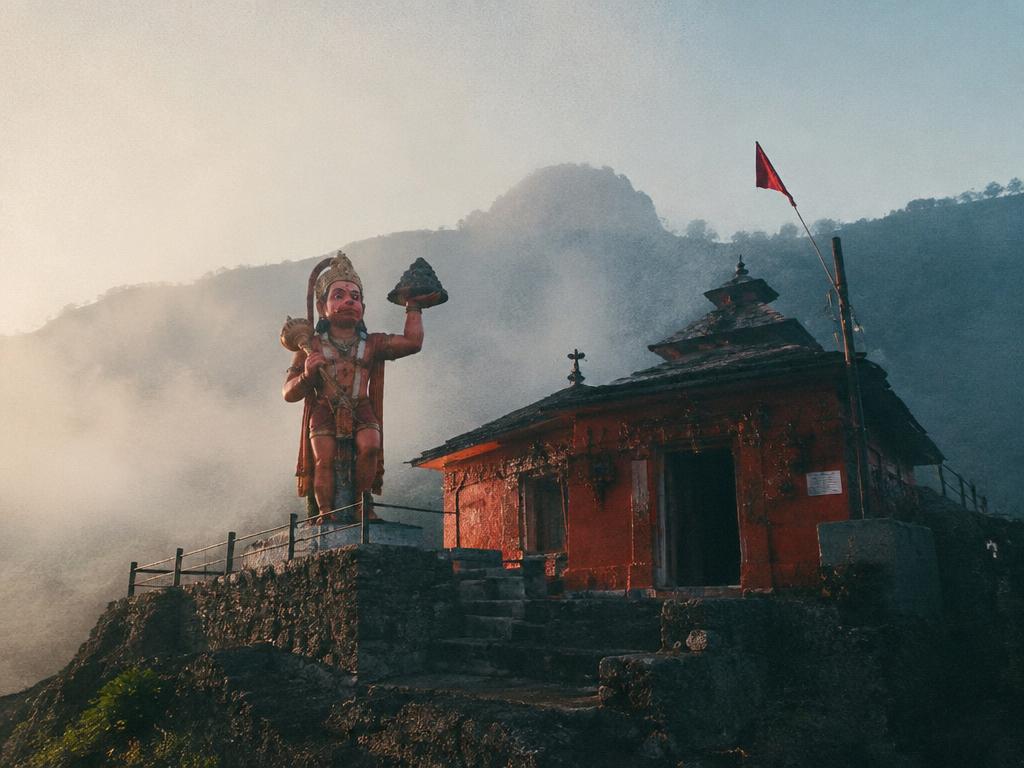
Nashik, Maharashtra
Anjaneri, near Trimbakeshwar, is held by many to be his birthplace — a plateau reached by a morning's climb. Small red sanctums stand on ridges and passes all across the subcontinent.
Unusual among his temples: here he is shown bearded and moustached, in a golden sanctum. Millions arrive on foot at Chaitra and Ashwin Purnima.
Known for its exorcism rites and its own strict rules — no prasad is carried home, and devotees do not look back on leaving.
On the ridge where he is said to have rested while seeking the sanjivani herb, beneath a 108-foot murti visible from most of the city.
An ancient self-manifested shrine in the middle of modern Delhi, holding a Guinness record for the longest continuous chanting of 'Shri Ram, Jai Ram' — unbroken since 1964.
The five-faced form, with the floating stone said to be from the Rama Setu displayed beside it.
An eighteen-foot standing murti in the open air, without a roof — the shrine has remained deliberately unroofed for centuries.
The palace gate guarded by a Hanuman image cloaked in red since 1672, giving the whole royal square its name.
A 135-foot murti beside the highway, one of the tallest in the world; Veera Abhaya Anjaneya at Paritala and the 135-foot Anjaneyar in Nandura rival it.
Kashtabhanjan Dev — 'breaker of sorrows' — built by the Swaminarayan tradition, famous for Saturday crowds.
Tuesday and Saturday are his days and the busiest; a weekday dawn gives you a quiet sanctum. Hanuman Jayanti brings crowds measured in lakhs.
Sindoor, mustard oil, red flowers, a betel leaf, boondi laddoo or jaggery. Most shrines sell a ready thali at the gate.
Remove footwear well before the steps, keep phones away in the sanctum, and watch your prasad around the monkeys — they are his, and they know it.